Discover how students of Dalton IKC Sint Joris investigated the albedo effect and its impact on Earth’s climate through a hands-on Micro:bit project as part of the Erasmus+ project GreenTech with micro:bit.

Project Overview

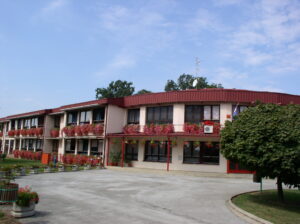
At the Jorisschool in Borculo, groups 7 and 8 worked on a special project focused on global warming. As part of the project, the micro:bit – a programmable computer that was new to many of the students—was introduced and used throughout the activities.

From Ideas to Experiments

The schoolyard is currently largely covered with tiles. With the goal of making the area greener, an investigation was carried out together with the students to determine which surfaces heat up the fastest.

During the experiment, students worked in pairs. The central question was: which surface heats up the fastest? Various surfaces were examined, including moss, wet sand, dry sand, and paving stones. As there happened to be sunny weather at the time, this was also included in the investigation.

Programming and Measurement

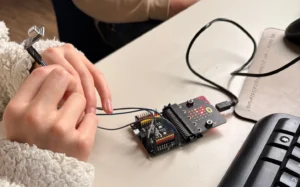
Using the micro:bit, temperatures were measured every five minutes, and the results were carefully recorded in graphs.

After an hour of comparing and analyzing the data, a clear conclusion was reached: asphalt heats up the fastest, while moss and wet sand warm up much more slowly. This provided valuable insights for the future design of the schoolyard.

From Data to Design

With this new knowledge, the students took on the role of designers. Ideas were developed for a greener and cooler schoolyard. These ideas aligned perfectly with a competition organized by the municipality of Berkelland: “The Greenest Schoolyard of Berkelland,” in which the school participated with great enthusiasm.

Presentation and Recognition

During the presentation, the students not only showcased their designs but also repeated their experiment using the micro:bit. The municipality expressed strong appreciation for both the research and the approach taken.

Although the main prize was not awarded, a contribution of 1 000€ was received to support the greening of the schoolyard—an important step toward a more sustainable learning environment.

Learning for the Future

Perhaps most importantly, the project allowed the students to experience that they can actively contribute to solutions for major global challenges. Their enthusiasm for the micro:bit suggests that this will not be the last project of its kind.

Other Blog Posts